
You’ve likely come across (or are yourself) a grammarian who bristles when people misspell or mix up words and phrases that sound similar to each other. But, in my mind, there’s no surefire way to know when to use which spelling unless you spend time memorizing things out of context or encounter things so many times while reading that you know innately which is correct. In the case of the former, I don’t know many people who find rote memorization an enjoyable task, and the latter is (in my opinion) a great long-term solution but not practical in the short-term.
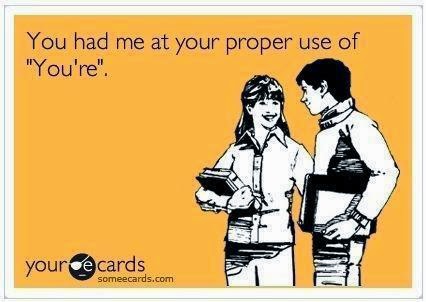
The good news is that there are many, many, many resources online for grammar tips when you’re in a pinch. While reference books like Strunk & White’s Elements of Style will always have a place on my shelf, it’s often much quicker to just Google a grammar question and be on your way.
I don’t really want this to be a grammar blog. It may seem like a natural fit within the content I plan to produce, but, realistically speaking, it would be repetitive (and probably very boring) to dedicate space on the blog to the nuts and bolts of grammar.
So instead, the Adventures in Language series will delve into the caverns of the English language in search of some lesser-known treasures.
To start out, I want to trace the journey words make through history to arrive in their present iterations, both because it’s often fascinating and because it might be nice to know who’s to blame for English’s unnecessary complications. I hope to answer all your burning questions, including: who decided we need compliment, complement, affect, effect, who’s, whose, desert, and dessert? Why do we say “beef” instead of “cowmeat,” “poultry” instead of “chickenmeat,” and “venison” instead of “deermeat?” What do Shakespeare and Internet memes have in common? Why do people insist we avoid prepositions at the end of sentences and lament we don’t know who we need to say “whom?” to?
I’m sure you’re just as excited about this series as I am.
So please stay tuned! The first post will be out next week.

 What's the Word?